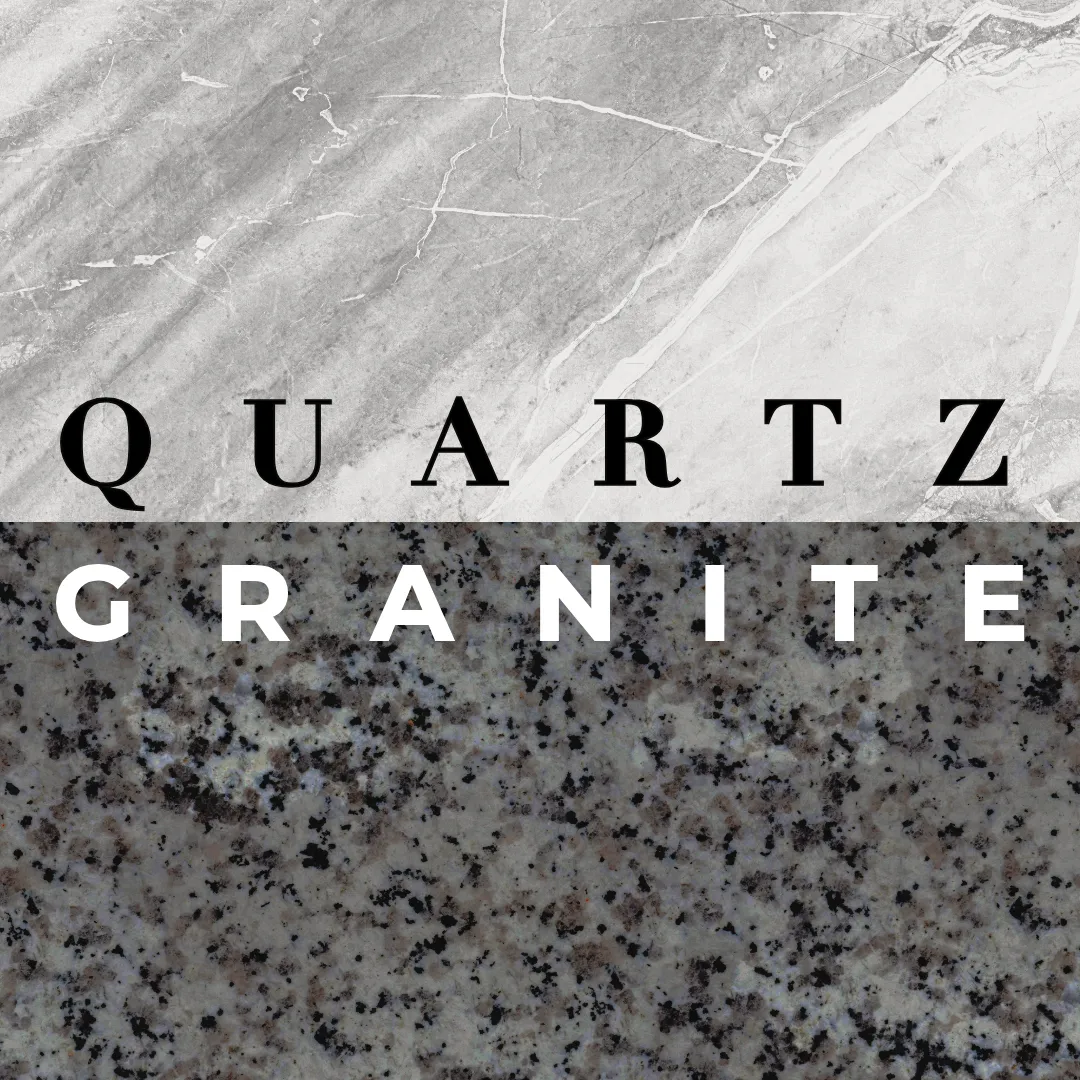
Quartz Or Granite?
In our post “Upcoming 2025 Interior Design Trends”, we covered a lot of ideas, but I wanted to look at specific materials a little more. I took a look around our showroom and thought, what material are people getting excited about when they walk in here? Well of course, it’s right by the door: quartz and granite. The stones used for countertop—or potentially backsplash, if we’re getting creative.
While doing research, I came across some beautiful kitchens on many different websites. No matter where I looked, people cannot get enough of these two materials, particularly quartz. But why? Is quartz the better buy? Is there a reason that these two materials in particular make the best countertops? What makes them different? Many people have surely asked the same questions, in an attempt to figure out which will suit their space the best.
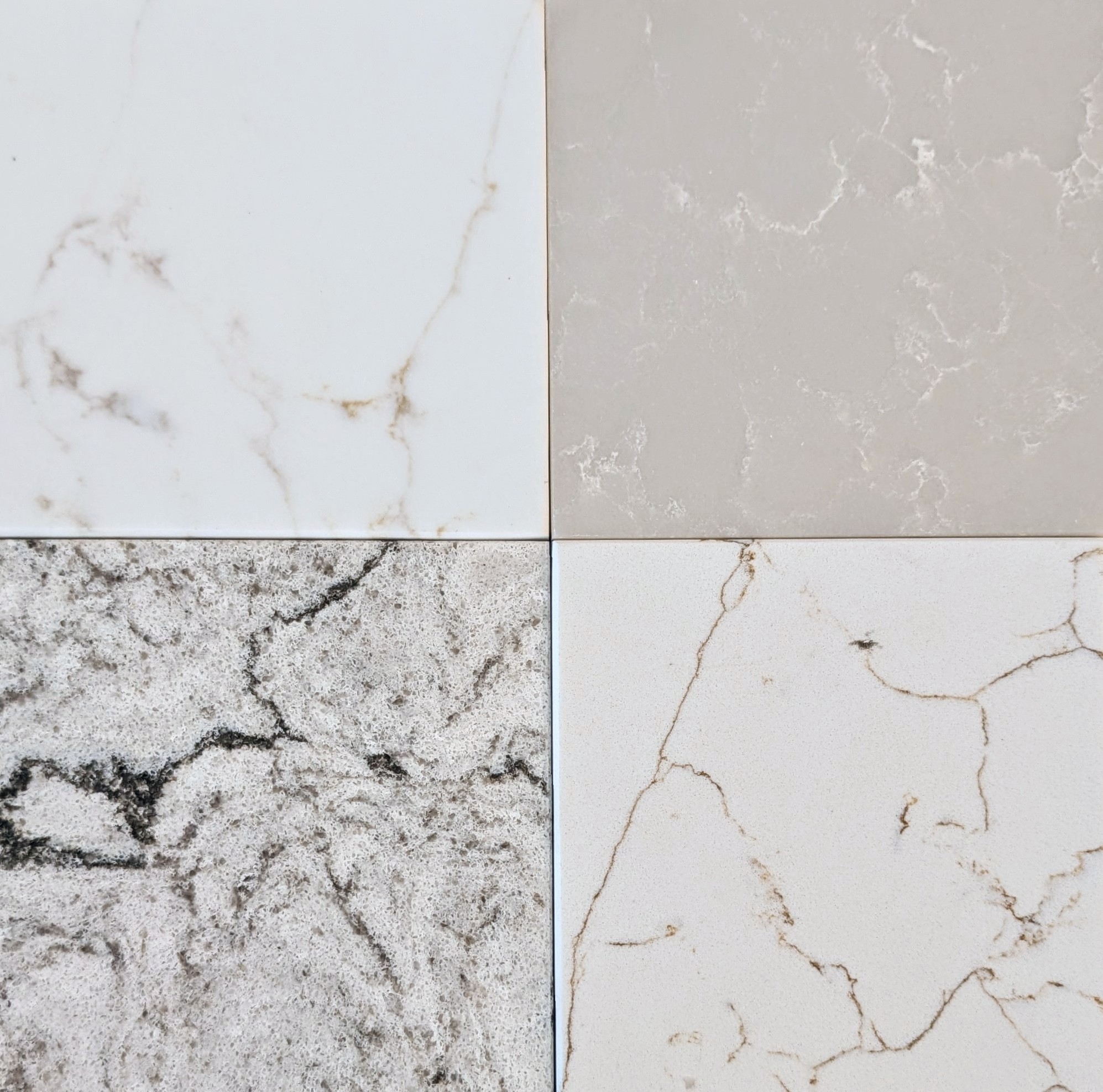
In our showroom, we have quite a few carriers for quartz. So let’s start there. We offer LG Quartz, Premium Natural Quartz by MSI, and Cambria Quartz. Each can fit various clients depending on their budget and style. Here’s a few images showing the differences between each sample of the Quartz.
Let’s switch over to the aesthetic difference between the two stones. Here are a few examples of granite. This is a natural stone, and it has a more “busy” look to it than its counterpart. Because granite forms naturally, you get rich variation—swirls, veins, speckles—sometimes all in one slab. For some, that character and uniqueness are exactly what makes granite so beautiful.
Natural vs. Manmade: What That Really Means
The key distinction between these two materials lies in how they’re made.
Granite is a natural stone, taken directly from the Earth. It's then cut into slabs, polished, and delivered, and installed as your countertop. There are no additives, and no two granite slabs are the same. You are getting a completely unique cut of Earth's artwork. However, you should also consider that because it’s porous by nature, granite requires periodic sealing every 9 to 12 months so it doesn't grow dull.
Quartz, on the other hand, is engineered stone. It’s made from about 90–95% crushed natural quartz—one of the hardest minerals on Earth—combined with resins and binding materials. This combination is pressed and baked into slabs, giving you a dense, non-porous surface that doesn’t need to be sealed. The resins make it a bit more flexible and forgiving during installation, and the pigments allow for a wide variety of consistent colors and patterns.
So while granite offers natural variation and raw elegance, quartz offers consistency, durability, and ease of care—which is a big reason why it’s become so popular in modern kitchens.
Maintenance and Durability
Quartz countertops are non-porous, so they don’t require sealing. They’re stain-resistant, scratch-resistant, and generally more resistant to common kitchen spills like wine, coffee, and oils. For families or anyone who doesn’t want to worry about routine upkeep, quartz is a very low-maintenance option.
Granite countertops, while incredibly strong and heat-resistant, are more porous, which means they can absorb liquids if left untreated. But with proper sealing and occasional care, granite can last a lifetime. It's also highly scratch- and heat-resistant, making it an excellent option for serious home chefs.
Cost and Style Considerations
The price of both materials can vary depending on the brand, color, edge profile, and installation factors. In general, granite can be slightly more affordable, especially in common patterns. Quartz tends to have more stable pricing, especially for popular colors or from premium brands like Cambria.
In terms of appearance, quartz is ideal for those who love a sleek, modern look, often mimicking marble or concrete with soft veining or solid colors. Granite, by contrast, is perfect for those who appreciate the drama and depth of a naturally formed stone. It’s all about what fits your vision.
Final Thoughts: Which Is Right for You?
If you value low maintenance, a uniform aesthetic, and a wide color range, quartz is likely your best match. If you’re drawn to natural patterns, unique textures, and the beauty of raw stone, granite might be the winner.
The good news? You really can’t go wrong with either. Both quartz and granite offer long-lasting performance, beauty, and value for your kitchen.
Come by the showroom, and we’ll walk you through the samples—side by side—so you can see, touch, and compare them in real time. Whether you lean toward natural elegance or sleek sophistication, we’ll help you find the perfect countertop to elevate your space.